Last Updated: June 2026 | Reading time: 11 min
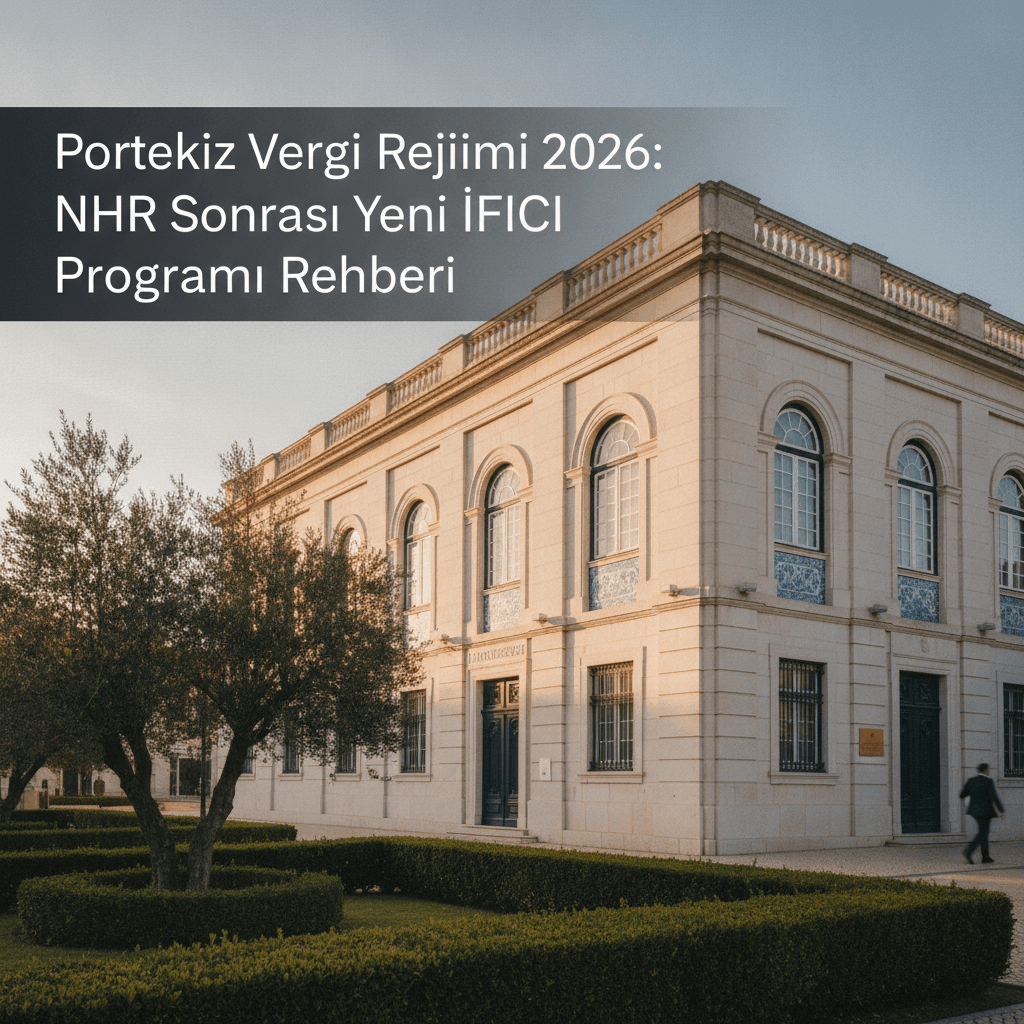
For over a decade, Portugal was a magnet for expats, investors, and digital nomads, largely thanks to its highly attractive Non-Habitual Resident (NHR) tax regime. However, that era came to a close at the end of 2023. Facing pressures from a housing crisis and public debate on tax fairness, the Portuguese government officially ended the NHR program for new applicants. Fast forward to 2026, a new, more targeted scheme has taken its place: the Tax Incentive for Scientific Research and Innovation (IFICI). This program is Portugal's strategic pivot to continue attracting high-value talent, albeit from a much more specific pool. This comprehensive guide breaks down everything you need to know about the Portugal NHR replacement, IFICI, in 2026.
If you are a highly qualified professional, a researcher, a tech innovator, or a university professor considering a move to one of Europe's most vibrant hubs, this article is your essential roadmap. It explores the eligibility criteria, tax benefits, application process, and key differences between the old NHR and the new IFICI. Let's delve into what this new chapter in Portugal's tax landscape means for you.
The End of NHR and the Rise of IFICI
To understand IFICI, one must first understand why NHR was abolished. The NHR regime offered a 20% flat tax on Portuguese-source income and a tax exemption on most foreign-source income for ten years. While it successfully attracted significant capital and talent, it was also criticized for exacerbating the housing affordability crisis in cities like Lisbon and Porto and creating a perception of tax inequality. The government's decision to scrap it was a direct response to these domestic pressures.
However, Portugal did not want to lose its competitive edge in attracting top-tier talent. Instead of the broad-stroke approach of NHR, the government introduced IFICI—a targeted incentive aimed squarely at individuals who can contribute to Portugal's knowledge-based economy. The new program is designed to bolster the country's R&D, higher education, and technology sectors, aligning tax policy with strategic economic goals.
What is the IFICI Program and Who Is It For?
IFICI is not simply NHR 2.0. It is a new regime with a distinct philosophy. It grants a special tax status for 10 consecutive years to individuals who become tax residents in Portugal and engage in specific, high-value-added activities. The list of eligible professions is significantly narrower than under NHR and is tightly linked to scientific research, innovation, and higher education.
As of 2026, the primary groups eligible for the IFICI program include:
- Higher Education and Scientific Research: University professors and scientific researchers holding a PhD who are integrated into the national science and technology system.
- Qualified R&D and Innovation Roles: Individuals with specific qualifications working in companies that meet certain criteria, such as receiving contractual benefits for productive investment or being recognized as innovative. This includes roles in corporate R&D departments.
- Staff of Certified Startups: Qualified professionals and board members working for startups certified by the national agency, Startup Portugal. This covers a wide range of roles within the tech ecosystem.
- Jobs in Autonomous Regions: Specific qualified positions located in the autonomous regions of Madeira and the Azores, as defined by regional decree.
Step-by-Step Application Guide (2026)
The application process for IFICI is more rigorous than it was for NHR, requiring pre-approval and more extensive documentation. A meticulous approach is crucial to ensure a successful outcome.
Step 1: Become a Tax Resident in Portugal
The foundational requirement is to establish legal and tax residency in Portugal. You are generally considered a tax resident if you spend more than 183 days in Portugal within a 12-month period or if you have a permanent home there.
- Obtain a NIF (Tax Identification Number): This is essential for all financial activities in Portugal. It can be obtained from a local Finanças (tax office) or through a legal representative.
- Secure a Residency Permit: If you are a non-EU citizen, you must first obtain a suitable visa (e.g., D3 Visa for Highly Qualified Professionals) and then apply for a residency permit upon arrival.
- Register as a Tax Resident: Once you have your residency permit and have moved to Portugal, you must update your status at the Finanças office to be officially registered as a tax resident.
Step 2: Get Your Activity Certified
This is the most significant new hurdle. You must have your professional activity officially recognized as eligible by a designated Portuguese entity before applying for the tax status.
- For Researchers/Academics: Recognition is typically granted by the FCT (Foundation for Science and Technology).
- For Corporate R&D/Tech Roles: Your employer must be certified by an entity like ANI (National Innovation Agency) or IAPMEI (Agency for Competitiveness and Innovation).
- For Startup Employees: The startup must be officially recognized by Startup Portugal.
Step 3: Apply for IFICI Status with the Tax Authority
With your tax residency established and your activity certified, you can formally apply for IFICI status through the online portal of the Portuguese Tax and Customs Authority (AT). The deadline for this application is March 31st of the year following the year you became a tax resident. For instance, if you become a tax resident in 2026, your deadline is March 31, 2027.
🏠 Start Your New Chapter in Portugal
For expert guidance on the IFICI program and investment opportunities in Portugal, contact our team at Century21 Perfect Bağdat Caddesi.
📞 +90 552 688 0195 | 📧 ashkan.ahani@century21.com.tr
Required Documents & Costs
Being prepared with the right documentation and a clear understanding of the costs involved is key to a smooth application process.
Your Document Checklist
- Passport & Residency Card: Your valid travel document and Portuguese residency permit.
- NIF Certificate: Official proof of your tax identification number.
- Proof of Address: A rental agreement (lease) or property deed in your name.
- Proof of Eligible Professional Activity: This is the core of your application and may include:
- A detailed employment contract specifying your high-value role.
- Your PhD diploma (apostilled and officially translated).
- Registration with a professional order or association in Portugal.
- Official certificates from entities like ANI, FCT, or Startup Portugal confirming the eligibility of your employer or activity.
- Tax Residency Certificate from Previous Country: To prove you were not a tax resident in Portugal for the previous five years.
Estimated Costs in 2026
The following table provides an estimate of the costs you might encounter during the IFICI application process. Fees can vary based on your chosen legal and tax advisors.
| Service/Fee | Estimated Cost (EUR) | Notes |
|---|---|---|
| NIF & Bank Account Setup | €250 - €500 | When using a fiscal representative. |
| Visa & Residency Permit Application | €1,500 - €3,000 | Includes legal advisory fees. |
| Document Translation & Notarization | €300 - €800 | For diplomas, criminal records, etc. |
| IFICI Application Advisory | €2,000 - €5,000 | Covers the entire tax registration process. |
| Total Estimated Cost | €4,050 - €9,300 | Approximate total for the end-to-end process. |
NHR vs. IFICI: A Comparative Analysis
Understanding the key differences between the old and new regimes is vital for managing expectations. The most crucial distinction is the target audience.
| Criterion | NHR Regime (Former) | IFICI Regime (New - 2026) |
|---|---|---|
| Eligibility Scope | Broad list of professions, passive income earners, and pensioners. | Very narrow scope: Scientific research, innovation, tech, and higher education. |
| Tax on Pensions | 10% flat tax on foreign pensions. | Taxed at standard progressive rates. No benefit for retirees. |
| Application Process | Relatively simple, direct registration with the tax authority. | More complex, requires prior certification from a designated entity (FCT, ANI, etc.). |
| Foreign Income | Most foreign income (dividends, interest, royalties) was exempt. | Similar exemption for most passive income from countries with a Double Tax Treaty. |
Frequently Asked Questions (FAQ)
What happens to my existing NHR status?
If you were already registered as an NHR before the program ended, your status is secure. You will continue to benefit from the NHR rules for the remainder of your 10-year term. The new IFICI rules do not affect existing NHR holders.
Can retirees benefit from the new IFICI program?
No. IFICI is exclusively for actively working professionals in the specified high-value fields. There is no longer a special tax incentive for foreign pension income.
Can I apply for IFICI as a freelancer?
Yes, it is possible to apply as a self-employed professional (freelancer) if your services fall within the eligible activities (e.g., providing specialized R&D consulting to a certified Portuguese company). You will need to provide invoices and contracts as proof, and your application will likely face greater scrutiny.
How long must I reside in Portugal to maintain IFICI status?
You must maintain your tax residency in Portugal for each of the 10 years. This typically requires spending over 183 days per year in the country or having your main, permanent home there.
What happens after the 10-year IFICI period ends?
Once your 10-year incentive period is over, you will become subject to Portugal's standard progressive income tax rates on your worldwide income, just like any other resident.
Can I qualify for IFICI through an investment?
Not directly. Unlike a Golden Visa, IFICI is not an investment-based program. However, investing in and taking an active management role in a certified Portuguese startup could be a pathway to meeting the eligibility criteria.
What if my IFICI application is rejected?
If your application is denied, you have the right to appeal the decision administratively or through the tax courts. Rejections are often due to incomplete documentation or a failure to prove the eligibility of the professional activity. Working with an expert from the start minimizes this risk.
Expert Tips for a Successful Application
Based on our experience helping clients navigate complex residency and tax programs, here are some practical tips for your IFICI application:
- Engage Professional Help Early: The Portuguese tax system is complex. A local tax advisor or lawyer specializing in this field is an invaluable asset who can save you time and prevent costly mistakes.
- Prepare Your Documents in Advance: The process of getting diplomas and professional certificates apostilled and translated can be time-consuming. Start this before you even move to Portugal.
- Verify Your Employer's Eligibility: If you are moving for a job, confirm with your prospective employer that the company and your specific role meet the criteria for IFICI certification. Get it in writing.
- Choose the Right Visa Pathway: Your entry visa is the first step. The D3 Visa for Highly Qualified Professionals is often the most appropriate route for IFICI candidates.
- Mind the Deadline: The March 31st deadline is strict. Missing it means you lose the benefit for that tax year. Plan your timeline carefully and do not leave the application to the last minute.
Conclusion: Is the New Portuguese Tax Regime Right for You?
Portugal may have closed the book on the NHR, but with IFICI, it has started a new, more focused chapter. The Portugal NHR replacement IFICI is a clear signal that the country is not closing its doors but is instead rolling out a more strategic welcome mat for a niche group of professionals who can drive its innovation agenda. If you are a top-tier talent in science, tech, or academia, the 20% flat tax and foreign income exemptions offered by IFICI remain a compelling proposition.
However, applicants must be aware that the path is narrower and the requirements are stricter. A careful evaluation of your professional profile against the new criteria is essential. If you need assistance navigating this new landscape, please feel free to contact us for a consultation.
🏠 Professional Guidance
Let us help you create a personalized roadmap for navigating Portugal's new tax regime and investment opportunities. Our team at Century21 Perfect Bağdat Caddesi is here to assist.
📞 +90 552 688 0195 | 📧 ashkan.ahani@century21.com.tr
- Why Portugal's NHR tax regime was discontinued and replaced by the IFICI program.
- Who is eligible for the IFICI program and what its core tax advantages are.
- The step-by-step application process for IFICI as of 2026.
- The necessary documents, estimated costs, and the main differences between NHR and IFICI.
- Crucial tips to avoid common pitfalls during the application process.
Aşkan Behbud — Century 21 Perfect, 15+ years of real estate experience, Bağdat Caddesi