Last Updated: August 2026 | Reading time: 11 min
As European Golden Visa programs tighten their requirements or shut down entirely—with Spain closing its program in 2024 and Greece raising its threshold to €800,000—global investors are increasingly turning their attention back to the Caribbean. In 2026, the freedom of visa-free travel and the strategic tax advantages offered by a second passport have never been more valuable. The fundamental question for every applicant, however, remains: should you opt for the faster, lower-cost donation route, or choose a real estate investment that offers the potential for a long-term return? This is more than a financial decision; it's a strategic choice about your future.
This comprehensive guide will analyze the two primary pathways for Caribbean citizenship: donation versus real estate. Drawing on my 15+ years of experience at Century21 Perfect, I will break down the costs, processes, benefits, and potential risks of each option. Our goal is to empower you to determine the optimal strategy for you and your family. This journey is not just about acquiring a passport—it's about making a smart, informed investment decision.
What Are Caribbean Citizenship by Investment (CBI) Programs?
Caribbean Citizenship by Investment (CBI) programs are legal frameworks that offer foreign investors and their families full citizenship and a passport in exchange for a significant economic contribution to the host country. These programs are primarily offered by five nations, often called the 'Caribbean Five': St. Kitts & Nevis, Grenada, Dominica, Antigua & Barbuda, and St. Lucia. These countries leverage foreign investment to strengthen their national economies, funding projects in infrastructure, tourism, and disaster relief.
For investors, the benefits are substantial: visa-free access to over 140 countries, including the UK, the EU Schengen Area, China, and Russia; potential tax efficiencies; and a robust 'Plan B' against global and political uncertainty. Last year, a client from the UAE chose the Grenada passport not just for Schengen access but for his children's future plans to study in the UK. It's a clear example of how these programs provide a legacy of security that extends far beyond a simple travel document.
The Two Main Investment Routes: Donation and Real Estate
Caribbean CBI programs present two distinct investment options. Each has its own financial structure, timeline, and ideal investor profile. Understanding the nuances of both is critical before making a commitment.
1. The Non-Refundable Contribution to a National Fund (Donation)
This is widely regarded as the most straightforward and fastest path. The investor makes a one-time, non-refundable donation to a government-managed development fund, such as the Sustainable Growth Fund in St. Kitts & Nevis or the National Economic Fund in St. Lucia. The donation amount varies based on the number of dependents, typically starting at $100,000 USD for a single applicant. This route is ideal for investors who prioritize speed and simplicity and do not expect a financial return on their capital outlay.
2. Investment in Government-Approved Real Estate
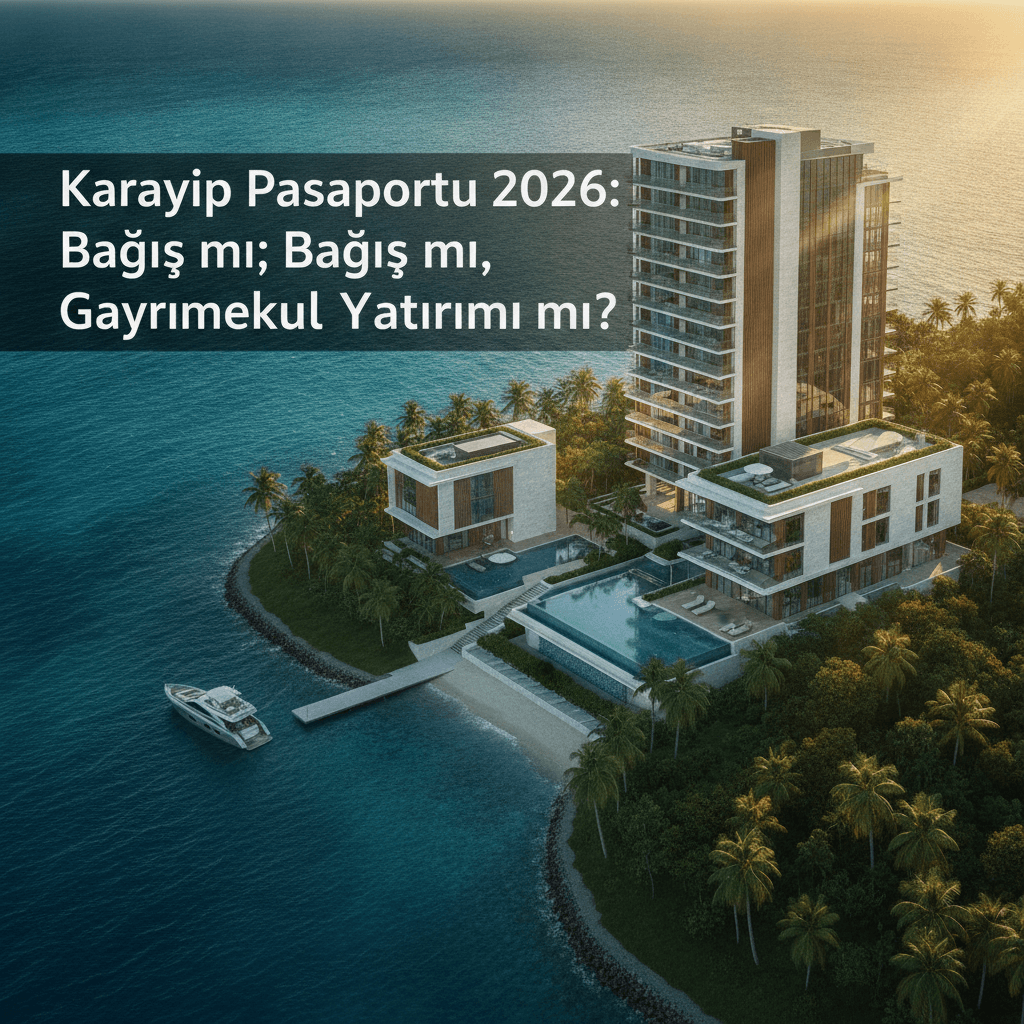
In this option, the investor purchases a share or full title in a pre-approved real estate project, usually a luxury hotel, resort, or villa development. The minimum investment typically starts at $200,000 USD. A key condition is that the investor must hold the property for a mandatory period, usually 5 to 7 years, after which it can be sold on the open market or to another CBI applicant. This path is more appealing to investors who seek to recoup their initial investment and potentially generate a return through rental income and capital appreciation.
🌏 Your First Step to Global Freedom
Discuss your Caribbean passport options and receive a personalized investment analysis from our experts at Century21 Perfect.
📞 +90 552 688 0195 | 📧 ashkan.ahani@century21.com.tr
A Detailed Comparison: Donation vs. Real Estate
To make an informed choice, it's essential to evaluate both options against a clear set of criteria. The following table provides a summary based on current 2026 data.
| Criterion | Donation Route (Fund Contribution) | Real Estate Investment |
|---|---|---|
| Minimum Investment (Single) | Starts at $100,000 USD | Starts at $200,000 USD |
| Total Cash Outlay | Lower (investment + fees) | Higher (investment + fees + taxes) |
| Return on Investment (ROI) | None (Non-refundable contribution) | Potential exists (Rental income + capital appreciation) |
| Processing Speed | Generally faster (3-5 months) | Can be slightly slower (4-7 months) |
| Asset Ownership | No | Yes, title deed or share certificate |
| Mandatory Holding Period | Not applicable | 5-7 years |
| Exit Strategy | Not required | Resale possible after holding period |
Cost Analysis: What is the True Bottom Line?
While the donation option appears cheaper at first glance, a comprehensive analysis must consider the total cost of ownership and long-term value, not just the headline investment amount.
Upfront Costs
Both options involve additional costs beyond the principal investment, including government processing fees, due diligence fees, and application fees. The difference in total outlay becomes more pronounced for a family application.
For example, for a family of four in St. Lucia, the total cost via donation is approximately $175,000 USD. The real estate route, with a $200,000 USD investment plus additional fees, can exceed $250,000 USD. But this is only half of the equation.
Long-Term Value
The primary advantage of real estate is its potential to retain and grow its value over time. After the 5-7 year holding period, you can sell the property and recover a significant portion of your investment. Branded hotel projects in prime Caribbean tourist locations can also generate a steady rental income. In this scenario, your net cost could ultimately be lower than the donation amount. The donation, in contrast, is a sunk cost; the price of the passport is the total amount you pay.
Return on Investment (ROI) and Risks
Your decision should be based not only on cost but also on potential returns and associated risks. This analysis is deeply tied to your personal financial goals.
ROI Expectations in Real Estate
Approved projects are often shares in branded hotels and resorts that may offer a guaranteed net rental yield of 2% to 5% per annum. This income can help offset property maintenance and management costs. Additionally, as tourism in the Caribbean grows, the value of your property may appreciate. However, this is not guaranteed. Market conditions, natural disasters, or the quality of project management can impact value. As of 2026, projects in Grenada and St. Kitts, with their robust tourism infrastructure, tend to offer more stable return potential.
The Indirect Return of the Donation Option
There is no direct financial ROI with the donation route. The 'return' here is the intangible yet highly valuable benefits of the passport itself: global mobility, new business opportunities, tax optimization, and personal security. While it's difficult to assign a monetary value to these advantages, for many high-net-worth individuals, they far outweigh the cost of the contribution.
Frequently Asked Questions (FAQ)
Which Caribbean country offers the cheapest citizenship program?
As of 2026, for a single applicant, the lowest-cost options are typically the $100,000 USD donation routes in St. Lucia or Dominica. For families, however, Antigua & Barbuda can be more competitive with its $130,000 USD contribution for a family of four. The total cost for any application depends heavily on family size and associated fees, so a personalized quote is essential.
Does it take longer to get citizenship through real estate?
Yes, the process is typically slightly longer. While the donation route can be completed in 3-5 months, the real estate option involves additional steps like executing a sales and purchase agreement and title registration, which can extend the timeline to 4-7 months. For many investors, this marginal delay is a worthwhile trade-off for the potential to recoup their capital.
When can I get my investment back?
The donation is non-refundable. With a real estate investment, you must hold the property for a mandatory period of 5 to 7 years, depending on the country. After this period, you are free to sell the property and recover your investment, subject to market value at the time of sale.
Can I travel visa-free to the USA with a Caribbean passport?
No, Caribbean passports do not provide visa-free access to the United States. However, citizens of Grenada are eligible to apply for the USA E-2 Investor Visa, thanks to a treaty between the two countries. This allows them to start a business and reside in the US, an exclusive benefit not offered by other Caribbean passports.
Can I include my entire family in one application?
Yes, all Caribbean CBI programs allow the main applicant to include their spouse, dependent children (up to a certain age), dependent parents, and sometimes even siblings in a single application. Additional government and due diligence fees apply for each dependent added to the application.
Is the citizenship for life? Do I need to renew it?
The citizenship itself is granted for life and can be passed down to future generations. The passport document, however, has an expiry date (usually 5 or 10 years) and must be renewed. The renewal process is simple and does not require you to visit the country.
Do I have to visit the Caribbean during the process?
For the programs in St. Kitts & Nevis, Grenada, Dominica, and St. Lucia, there is no requirement to visit the country at any stage of the application or renewal process. The entire procedure can be handled remotely through an authorized agent. Only Antigua & Barbuda requires a short stay of 5 days within the first five years of citizenship.
Practical Advice from an Expert
Having guided hundreds of investors through this process, I can offer some practical advice to streamline your decision-making:
- Define Your Primary Goal: What is most important to you? Is it speed and simplicity, or is it long-term value and asset ownership? A clear answer to this question will point you in the right direction.
- Calculate the Total Cost: Don't just focus on the headline figures ($100k or $200k). Request a detailed cost breakdown for your specific family structure, including all processing, due diligence, and government fees.
- Plan Your Exit Strategy: If you choose real estate, think about your plan for year 5 or 7. Do you intend to sell, continue renting it out, or use it for personal holidays? Inquire about the project's liquidity and the secondary market.
- Consider the Grenada E-2 Advantage: If your long-term plans include living or doing business in the USA, the Grenada passport offers a unique pathway. This could be a decisive factor in your choice of country and investment.
- Work with a Licensed and Reputable Advisor: This is a complex process. Partnering with a government-licensed, experienced, and transparent advisory firm is the best way to avoid pitfalls and ensure a smooth application. You can take the first step by contacting us today.
Conclusion: Which is the Right Decision for You?
The choice between donation and real estate for Caribbean citizenship is a personal one, with no single 'right' answer. If your priority is the lowest initial outlay, maximum speed, and a straightforward process, the contribution (donation) route is the most logical choice. It is, in essence, purchasing the freedoms of the passport as a service.
However, if you have a higher capital threshold, want your investment to have the potential to return to you, and value the security of a tangible asset, a government-approved real estate project is a far more compelling alternative. This path allows you to merge your citizenship goal with an international property investment.
Whatever your final decision, remember that this is more than just acquiring a passport. It is a strategic investment in your family's future, your global mobility, and your financial portfolio. With the right information and professional guidance, you can take this significant step with confidence.
🏠 Let's Build Your Personal Investment Strategy
Schedule a complimentary consultation to determine which path best aligns with your financial goals and family structure.
📞 +90 552 688 0195 | Contact Us →
- Caribbean CBI programs offer two main investment routes: Donation and Real Estate.
- The donation route is faster and has a lower upfront cost but is non-refundable.
- The real estate route requires a higher initial investment but offers the potential for rental income and capital appreciation.
- The decision should be based on total cost, processing speed, ROI potential, and personal priorities.
- Country-specific advantages, like Grenada's E-2 treaty with the US, can play a crucial role in the decision-making process.