
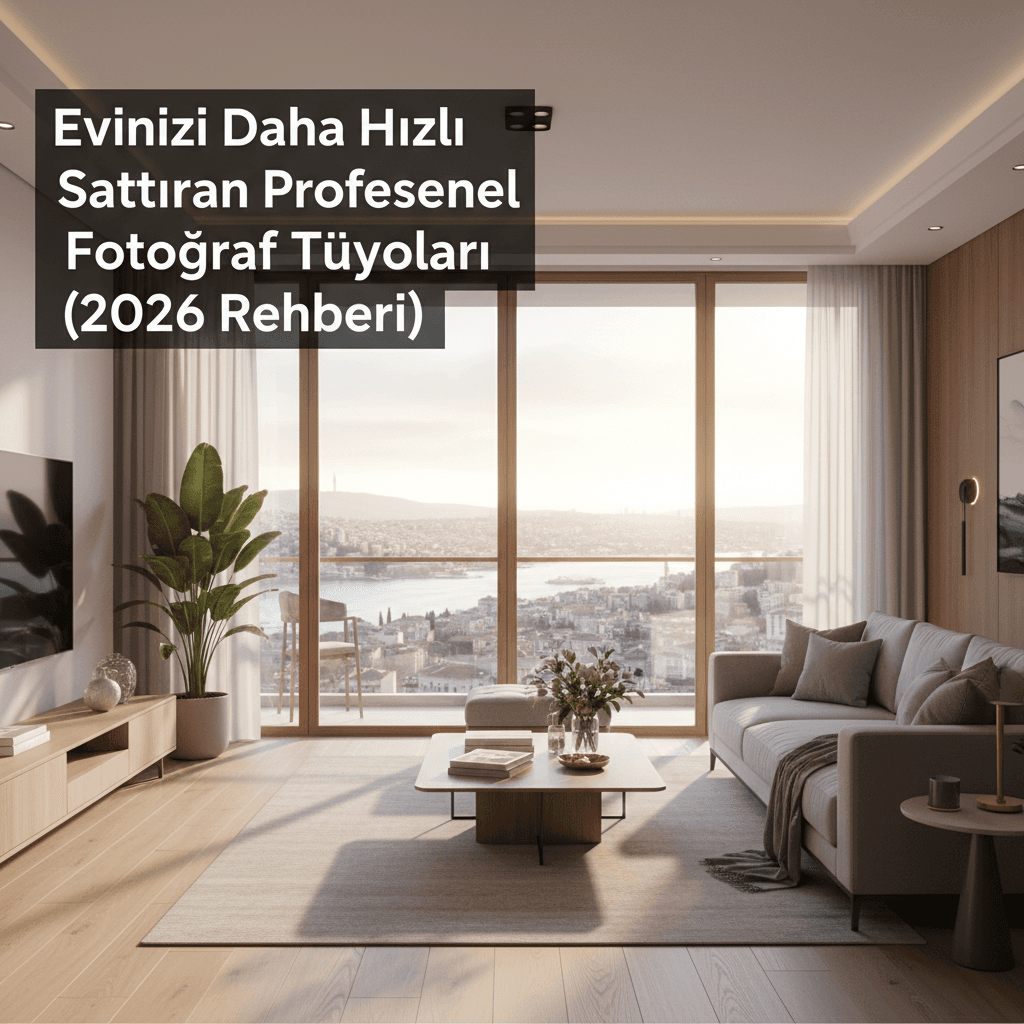
A potential buyer spends, on average, just 20 seconds on your online property listing. In that brief window, you either capture their attention, prompting a click for more details, or they scroll on to the next property. So, what plays the biggest role in these critical 20 seconds? The answer is unequivocal: the photographs. Your beautiful home, filled with natural light and spacious rooms, can have its potential completely masked by poorly taken, dark, and cluttered photos. Conversely, images captured with the right techniques can transform even an ordinary property into a highly desirable one.
Over my 15 years managing thousands of property sales at our Century21 Perfect office, I've seen it time and again: professional photography isn't an expense; it's one of the most profitable investments you can make. In the highly competitive 2026 Istanbul real estate market, a property presented with high-quality visuals not only sells for 5-10% more but also spends about 30% less time on the market. This guide will go beyond basic tips like 'don't shoot into the light' and teach you, step-by-step, how to think like a professional to showcase your home in its best possible light.
The Critical Role of Photography in the Sales Process
Many sellers mistakenly believe that their home's features—location, square footage, number of rooms—are sufficient on their own. However, buyers are emotional beings, and they form their first emotional connection to a property through its photos. A bad photograph can cause a buyer to skip your listing entirely, meaning they'll never even learn about its fantastic location or spacious living room. Your photos are your 'storefront' in the digital world, and the more appealing that storefront is, the more customers will step inside.
First Impressions are Formed in Seconds
As buyers scroll through hundreds of listings on property portals, their brains perform a subconscious 'triage' in milliseconds. A dark, blurry, cluttered, or overly personal photo sends negative signals like 'poorly maintained,' 'small,' or 'overpriced.' In contrast, a bright, sharp, spacious, and well-staged photo evokes feelings of 'well-cared-for,' 'valuable,' and 'a place I could live.' Last year, we were marketing a duplex apartment in Suadiye that received almost no interest for a month with the owner's own photos. Within 48 hours of commissioning a professional photoshoot, we received 12 viewing requests, and the property was sold within 10 days. This is a tangible testament to the power of a first impression.
Increasing Perceived Value and Trust
High-quality photos reflect not just the physical condition of the property, but also the care and value invested in it. They signal that the seller is diligent, takes the sales process seriously, and is transparent. When a buyer sees professional photos, they assume a professional process is behind the listing, which builds trust. This trust strengthens the seller's position during negotiations and can reduce low-ball offers. The photos silently communicate, "This home is worth the asking price."
Pre-Shoot Preparation: Perfecting the Scene
Even the best photographer with the most expensive gear cannot make an unprepared home look good. A successful real estate photoshoot is 70% preparation and 30% technical execution. Skipping these steps will render all your efforts futile.
Step 1: The Great Declutter & Deep Clean
Buyers want to envision their future home, not your current one. The first rule is to make the space feel as 'neutral' and 'spacious' as possible. This goes far beyond a quick tidy-up.
- Remove the Excess: Temporarily remove at least 30% of the items in every room. This includes small furniture, knick-knacks, magazines, and remote controls. Clear kitchen countertops completely, leaving only one or two stylish items, like a bowl of fresh fruit or an elegant coffee machine.
- Deep Clean Everything: Clean windows inside and out, as this directly impacts the amount of natural light. Polish floors, clean grout, and make sure bathroom and kitchen fixtures sparkle. Dust and grime are surprisingly visible in high-resolution photos.
- Hide the Wires: Tidy up and conceal all cables from TVs, routers, and chargers. Visible cables create a sense of disarray.
Step 2: Depersonalize Your Space
The buyer needs to be able to picture themselves living in the home. Your family photos, children's artwork, personal certificates, and refrigerator magnets hinder this process. Remove all these personal items before the shoot. The goal is to make the home feel like a boutique hotel room: clean, inviting, but anonymous.
Step 3: Minor Repairs and Maintenance
Small, visible flaws in photos can create a 'this home is neglected' perception. Go through this checklist before the shoot:
- Replace any burnt-out light bulbs, ensuring all lights have the same color temperature (preferably daylight or warm white).
- Fill any small cracks or holes in the walls with putty and touch up the paint.
- Fix leaky faucets or loose door handles.
- Ensure all cabinet doors close properly.
Technical Shooting Strategies: Shoot Like a Pro
Once the home is prepped, it's time to focus on technical skills. Even a good smartphone camera can produce great results with the right techniques, but using a DSLR or mirrorless camera will significantly elevate the quality.
Choosing Your Gear: The Power of a Wide-Angle Lens
A wide-angle lens is non-negotiable for real estate photography. A lens in the 16-24mm range will make rooms appear more spacious and airy. However, it's important not to overdo it. An ultra-wide (fisheye) lens can distort proportions and create an artificial look. Additionally, always use a tripod. A tripod ensures your images are sharp and steady, even in low-light conditions.
Light is Everything: The Art of Using Natural Light
The golden rule of real estate photography is to use natural light. Avoid using on-camera flash, as it creates harsh shadows and a sterile atmosphere.
- Timing is Key: The best time to shoot is typically in the morning or late afternoon. The light can be harsh during midday when the sun is directly overhead. The 'golden hours'—the period shortly after sunrise and before sunset—provide a warm, inviting light that is perfect for exterior shots.
- Turn on All Lights: When shooting interiors, supplement natural light by turning on every lamp, chandelier, and sconce. This adds warmth and depth to the space.
- Open Blinds and Curtains: Open all curtains and blinds completely to allow maximum light to flood the rooms.
Composition and Angles: Framing the Perfect Shot
How you frame a room can completely change its perceived size and appeal.
- Shoot from the Corner: The best way to make a room look spacious is often to shoot from a corner, usually the one opposite the doorway. This angle adds depth and allows you to capture three walls in one frame.
- Mind Your Height: Position the camera at about chest height (4-5 feet or 120-140 cm). Shooting from too low or too high can cause vertical lines to converge (perspective distortion), making walls look crooked. Ensure all vertical lines, like door frames and wall corners, are perfectly straight.
- Identify the 'Hero' of the Room: Every room has a focal point. In a living room, it might be a fireplace or a window with a view; in the kitchen, it could be the island or high-end appliances. Build your composition around this focal point.
🏠 Let Your Photos Do the Selling
Ready to create stunning photos and a professional marketing strategy for your property? Connect with our team at Century21 Perfect on Bağdat Caddesi.
📞 +90 552 688 0195 | 📧 ashkan.ahani@century21.com.tr
Room-by-Room Pro Shooting Tips
Each room has a unique purpose and character. Your photos should reflect these qualities.
Living Room
This is the heart of the home. Emphasize spaciousness, comfort, and sociability. Pulling furniture slightly away from the walls creates a sense of openness. If there's a fireplace, light it. If there's a great view, feature it. Take shots from at least 2-3 different angles.
Kitchen
The kitchen is a major selling point. Ensure countertops are clean and clear. Wipe down stainless steel appliances to remove fingerprints. Showing off high-end appliance brands is a plus. If possible, turn on under-cabinet lighting to add a modern touch.
Bedrooms
The feeling here should be calm and serene. Make sure the bed is neatly made, with a smooth duvet and fluffed pillows. Ensure all closet doors are closed. Find an angle that shows both the bed and the room's storage solutions.
Bathrooms
Bathrooms are often small, so making them look spacious is key. Always close the toilet lid. Open the shower curtain or glass door to show the tilework inside. Be mindful of reflections in the mirror; you and your camera should not be visible. A stack of clean, folded white towels adds a touch of spa-like luxury.
DIY vs. Hiring a Professional Photographer
So, should you do it yourself or hire a pro? The decision depends on your budget, time, and the value of your property. Here’s an objective comparison:
| Feature | DIY Photography | Professional Photographer |
|---|---|---|
| Cost | Zero or low (using existing equipment) | $200 - $800+ depending on the market and property (2026 estimates) |
| Quality | Variable, usually lower. Common issues with lighting, composition, and editing. | High and consistent. Right equipment, expertise, and professional post-processing. |
| Time Investment | High. Preparation, shooting, and editing can take hours or even days. | Low. The photographer completes the shoot in a few hours and delivers edited photos in 1-2 days. |
| Results | Fewer listing clicks, longer time on market, potentially lower final sale price. | More interest, faster sale, often results in higher offers. A clear return on investment. |
Frequently Asked Questions
How many photos are ideal for a listing?
The sweet spot is generally between 25-35 photos. This is enough to give buyers a comprehensive view of the property without overwhelming them. Be sure to include at least two shots of each room from different angles, exterior shots, any outdoor spaces like balconies or gardens, and amenities (pool, gym, etc.). Including a floor plan is also highly recommended to help buyers understand the layout.
Is drone photography necessary?
It's not essential for every property. However, for a detached house, a property with a large lot, a condo with a great view, or a home where its location within a community is a key selling point, drone photography can be a game-changer. It's the most effective way to showcase the property's surroundings, neighborhood, and geographical advantages (e.g., proximity to the sea, a park, etc.).
Are twilight shoots really worth it?
Yes, especially for high-end properties, they are absolutely worth it. Photos taken just after sunset, when the sky turns a deep blue and the home's lights are on, create a dramatic, warm, and luxurious feel. This type of shot is often used as the main 'hero' image for the listing and can significantly increase click-through rates.
How long does a real estate photo shoot take?
This depends on the size of the property and the photographer's process. For an average two or three-bedroom apartment, the shoot itself (excluding prep time) typically takes between 1.5 to 3 hours. Larger homes or additional services like drone footage or video will extend this time.
What is the cost of a professional real estate photographer?
As of 2026, costs can range widely depending on your market, the size of the home, and the services included. Expect to pay anywhere from $200 for a basic package to over $800 for larger homes with drone and video. It's crucial to view this not as a cost, but as an investment that can add thousands to your final sale price.
Do 3D virtual tours replace the need for photos?
No, they are complementary tools. Photos are critical for creating the initial impression and grabbing attention. A virtual tour is for the serious buyer who has already clicked on the listing and wants to explore the home in detail before scheduling a physical visit. It's an invaluable tool for out-of-town or international buyers and helps filter out unserious inquiries, saving everyone time.
What is the most common photography mistake sellers make?
In my 15 years of experience, the single biggest mistake is shooting in portrait (vertical) orientation. Our phones have conditioned us to shoot vertically, but our eyes and computer screens are horizontal. Real estate photos should always be shot in landscape (horizontal) format to emphasize the width and space of a room. Vertical shots make rooms feel narrow and cramped.
Conclusion: Your Photos Speak for You
Selling your home is a significant financial and emotional undertaking. Representing your property in the best possible light is a crucial part of honoring its value. Remember, before a buyer reads a single word of your description, they will judge your home based on its photos. In those first few seconds, they will either think, 'Yes, I want to see more,' or they will scroll away. Well-prepared, beautifully lit, and professionally composed photographs are not just images; they are powerful marketing tools that communicate the value, quality, and potential of your property. By following the steps in this guide or enlisting professional help, you can dramatically accelerate your sales process and maximize your chances of achieving the best possible price. For more information and to build a winning marketing strategy for your property, get in touch with us today →.
🏠 Professional Consulting Services
We're here to help you sell your home at the right price, fast, with professional photography and a bespoke marketing strategy. Let our team at Century21 Perfect assist you.
📞 +90 552 688 0195 | 📧 ashkan.ahani@century21.com.tr
- Professional photos can increase the final sale price by up to 10% and reduce time on market by 30%.
- 70% of a successful photoshoot depends on preparation: cleaning, decluttering, and depersonalizing.
- The most critical technical elements are a wide-angle lens, a tripod, and the masterful use of natural light.
- Different shooting strategies should be applied to each room to highlight its unique character.
- Hiring a professional photographer is an investment that almost always pays for itself through a better, faster sale.