Last Updated: July 2026 | Reading time: 13 min
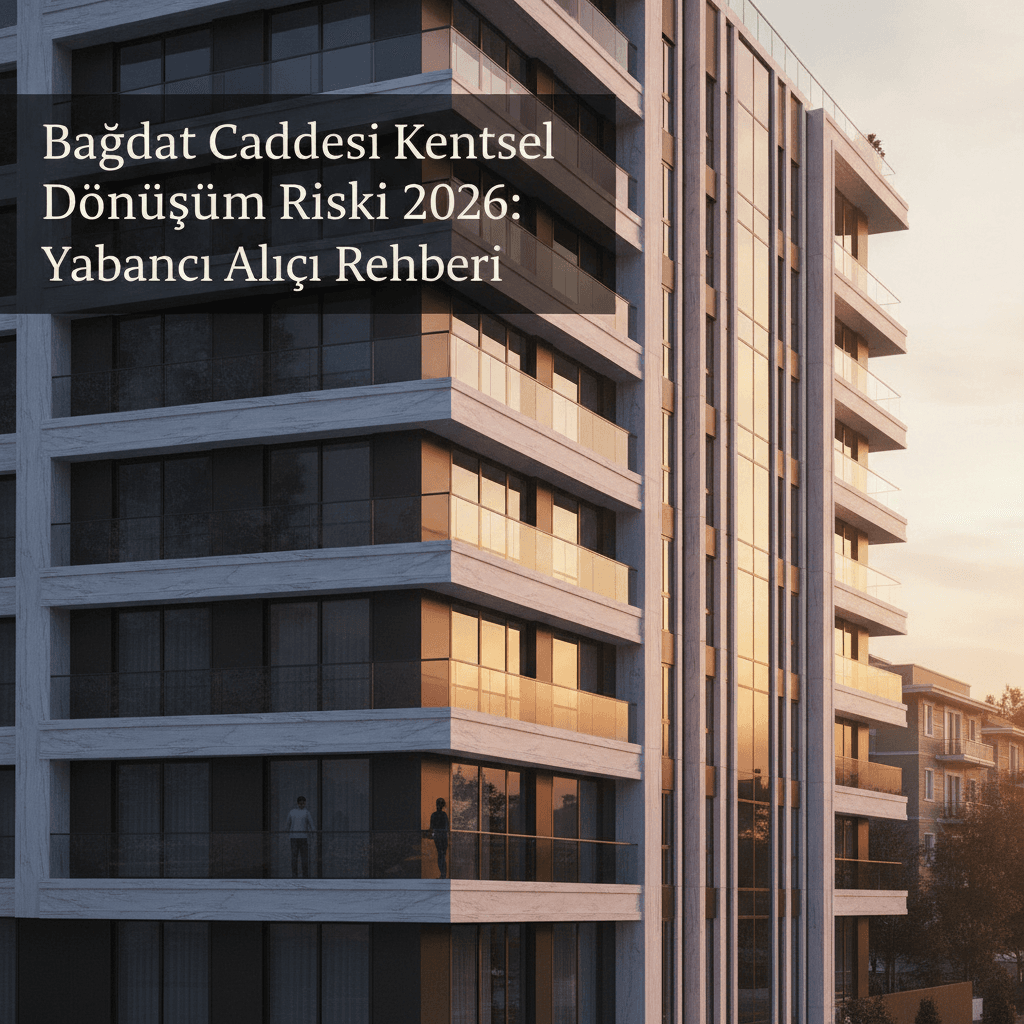
Bagdat Avenue is, without a doubt, one of Istanbul's most prestigious addresses and a perennial favorite for real estate investors. However, beneath its glamorous surface lies a critical dynamic that foreign buyers must navigate with care: Urban Transformation (Kentsel Dönüşüm). As of 2026, the process of renewing the area's aging building stock is gaining significant momentum. For an uninformed investor, this presents a considerable Bagdat Avenue urban transformation risk. Yet, for those who take the right steps, it can be a golden opportunity to multiply their investment's value.
This guide is designed to transparently explain the urban transformation process for foreign investors considering a property on Bagdat Avenue. Leveraging 15 years of on-the-ground experience, we will cover every essential detail, from the legal framework and costs to contractor selection and common pitfalls. Our goal is to empower you to navigate this transformation profitably, securing your investment rather than risking it.
What Is Urban Transformation and Why Does It Affect Bagdat Avenue?
At its core, urban transformation is the process of replacing buildings that are at risk from natural disasters or have reached the end of their economic life with modern, safe structures. In Turkey, the legal foundation for this is Law No. 6306, the "Law on the Transformation of Areas Under Disaster Risk." This law enables a building, once officially identified as a "risky structure" (riskli yapı), to be demolished and rebuilt, even without the unanimous consent of all owners.
So, why is this particularly relevant for Bagdat Avenue? A significant portion of the buildings along the Avenue and its surrounding neighborhoods (like Suadiye, Erenköy, Caddebostan) was constructed in the 1970s and 1980s. These structures were built to standards far below today's earthquake codes. Given the ever-present risk of a major Istanbul earthquake, renewing these buildings is not a choice but a necessity. Therefore, when you see an apartment for sale on Bagdat Avenue in 2026, there is a high probability that its building is a candidate for transformation in the near future.
How Is a "Risky Structure" Identified?
The first official step that triggers the urban transformation process is the "Risky Structure Assessment Report" (Riskli Yapı Tespit Raporu). This report is prepared by firms licensed by the Ministry of Environment, Urbanization, and Climate Change. A request from a single property owner is sufficient to initiate this process. The assessment involves analyzing the building's concrete quality, rebar structure, and overall static integrity. If the report concludes that the building is "risky," the transformation process legally begins.
The Legal Framework: How Law No. 6306 Affects Foreign Investors
The urban transformation process is not arbitrary; it is governed by a well-defined legal framework. Understanding your rights and obligations within this framework is crucial for investment security.
Your Rights as a Land Share Owner
When you buy an apartment, you are also buying a proportional "land share" (arsa payı) of the plot the building sits on. In urban transformation, the legal entity of concern is this land share, not the physical apartment. When the building is demolished, you remain an owner of that land. Your rights in the new project are determined by the size of your land share. This is why you must always verify the land share percentage on the title deed (Tapu) before purchasing.
The 2/3 Majority Rule and the Minority's Position
According to the law, decisions on how and by whom a risky structure will be rebuilt require the approval of at least a two-thirds (2/3) majority of the land shareholders. Once this majority is reached, their decision is legally binding on the remaining 1/3 minority. If you are in the minority and disagree with the decision, your share can be sold to the other shareholders or the state at a market value determined by an official appraisal (a process known as `cebri satış` or forced sale). This is one of the most feared scenarios associated with the Bagdat Avenue urban transformation risk.
The Urban Transformation Process: A Step-by-Step Guide
Let's move from theory to the practical steps a foreign investor will encounter. This entire process can typically take anywhere from 18 to 36 months.
- Risk Assessment and Reporting (1-2 Months): A licensed firm inspects the building and prepares the report. If the building is deemed risky, the Land Registry Office is notified, and an annotation ("riskli yapıdır") is added to the property's title deed.
- Notification and Appeal Period (2 Months): An official notification is sent to all property owners. Owners have 15 days to appeal the report. Appeals are reviewed by a technical committee, which makes a final decision.
- Decision and Agreement Phase (3-6 Months): Owners convene to decide on the rebuilding plan. The most common path is to sign a "Construction Agreement in Return for Land Share" (Kat Karşılığı İnşaat Sözleşmesi) with a contractor. Achieving the 2/3 majority is critical at this stage.
- Evacuation and Demolition (2-3 Months): Once an agreement is in place, owners are given at least 60 days to vacate the building. The building is then demolished under municipal supervision.
- Construction Phase (18-24 Months): Construction of the new project begins. It's important to monitor progress and conduct regular site inspections during this period.
- Occupancy Permit and New Title Deeds (2-4 Months): After construction is complete, a "Building Occupancy Permit" (Iskan) is obtained from the municipality. New title deeds for the individual units in the new project are then issued and delivered to the owners.
🏠 Get Professional Guidance Through This Complex Process
The urban transformation journey is filled with legal and technical complexities. Let the expert team at Century21 Perfect help you secure your investment on Bagdat Avenue.
📞 +90 552 688 0195 | 📧 ashkan.ahani@century21.com.tr
Costs and Financial Obligations
While urban transformation significantly increases a property's value, it requires a substantial upfront financial commitment. As a foreign buyer, you must be aware of these potential costs.
| Cost Item | Description | Estimated Cost (2026) |
|---|---|---|
| Risk Assessment Report | The report that determines the building's risk status. | $150 - $300 per flat |
| Construction Costs | If not a flat-share deal, or if extra payment is needed. | $50,000 - $120,000+ per flat |
| Relocation & Rent | Cost of alternative accommodation during construction. | $800 - $1,500 per month |
| Legal Consultancy | Lawyer's fee for contract review and process management. | $1,500 - $5,000 total |
| Taxes and Fees | Notary, title deed, and municipal fees (exemptions often apply). | Variable |
Government Support: Rent Subsidy and Loans
The Turkish government offers some incentives to support property owners during transformation. The primary one is a "rent subsidy" (kira yardımı). Owners who vacate their risky properties are eligible for a monthly payment during the construction period (usually limited to 18 months). For 2026, the rent subsidy in Istanbul is around 5,500 TRY per month. While this is a token amount compared to Bagdat Avenue rents, it is still a form of support. Additionally, owners can apply for low-interest "transformation loans" from participating banks.
Common Mistakes and How to Avoid Them
Over the years, we've seen investors make the same critical mistakes during the transformation process. Avoiding them can make all the difference for your investment.
- Signing Contracts Without Scrutiny: The construction agreement with the contractor is the constitution of the entire process. Every detail, including technical specifications, delivery dates, penalties for delays, and the brands of materials to be used, must be clearly stated. Always have it reviewed by a real estate lawyer.
- Underestimating the Land Share: An apartment with a small land share might result in a smaller apartment in the new project or require you to make a substantial extra payment. Always verify the land share percentage on the title deed.
- Not Vetting the Contractor: Thoroughly research the contractor's track record. Visit their previously completed projects, check their financial stability, and assess their reputation in the market. A stalled construction project is an investor's worst nightmare.
- Trying to Go It Alone: As a foreign investor, navigating Turkey's bureaucratic and legal landscape is challenging. Working with a trusted real estate advisor and a lawyer will protect you from countless potential errors.
Frequently Asked Questions (FAQ)
Can I sell my apartment after it has been declared a "risky structure"?
Yes, you can. The annotation on the title deed does not prevent a sale. However, this status must be disclosed to the buyer, and it will typically affect the property's price. The new buyer acquires the property along with all the associated rights and responsibilities of the transformation process.
As a foreigner, do I have the same rights as Turkish citizens in this process?
Absolutely. The right to property is constitutionally protected in Turkey. Under the principle of acquired rights, foreign investors have the exact same rights and obligations as Turkish citizens throughout the urban transformation process.
Is my transforming apartment eligible for a citizenship application?
This is a complex issue. Initially, if the property's value meets the citizenship threshold and the title deed is clear, an application can be made. However, during the construction phase, the old title deed is cancelled, and there is a period of ambiguity until the new one is issued. You must consult a citizenship law expert on this matter. You can get preliminary information using our Citizenship Check tool.
What happens if the contractor fails to finish the construction on time?
This is precisely why the contract is so important. Your agreement must clearly specify a monthly penalty for delay that the contractor must pay for every month the project is overdue. This clause acts as a powerful deterrent.
How much will my apartment's value increase after transformation?
This varies depending on the project and market conditions. However, as a general rule, a property on Bagdat Avenue that undergoes urban transformation sees its value increase by at least 70% to 150%. A flat in a new, modern, and safe building with amenities will always command a higher price.
What if I cannot afford my share of the construction costs?
You have a few options. You can apply for a low-interest urban transformation loan from a bank. Alternatively, you can negotiate with the contractor to cede a portion of your new apartment's square meterage in exchange for covering your debt.
Conclusion: High Rewards Through Calculated Risk
The Bagdat Avenue urban transformation risk, when managed correctly, is actually one of the region's most significant investment opportunities. The process can be complex, time-consuming, and initially costly. However, the end result is that you trade an old, at-risk property for a modern, safe, and highly valuable asset that is far easier to rent or sell. The key is to enter the process well-prepared, take every step with an expert, and know your rights.
Remember, participating in the right urban transformation project on Bagdat Avenue isn't just buying real estate; it's investing in future value today. We would be pleased to guide you on this journey.
The information in this article is for general informational purposes only and does not constitute legal advice. You should consult with a real estate lawyer and a professional advisor for your investment decisions.
🏠 Discover Investment Opportunities on Bagdat Avenue
To learn about our portfolio of properties with transformation potential or completed projects, please contact us.
📞 +90 552 688 0195 | 📧 ashkan.ahani@century21.com.tr
- Why older buildings on Bagdat Avenue have a high probability of entering urban transformation.
- What Law No. 6306 and the 2/3 majority rule mean for foreign investors.
- A step-by-step breakdown of the urban transformation process and its timeline.
- An overview of potential costs, including construction, rent, and consultancy fees.
- How to avoid common mistakes related to contracts, contractor selection, and land share.
- How, with proper management, urban transformation is a high-yield opportunity rather than just a risk.