Greece's Overlooked Golden Visa: The €250,000 Reconstruction Gateway
Last Updated: June 2026 | Reading time: 11 min
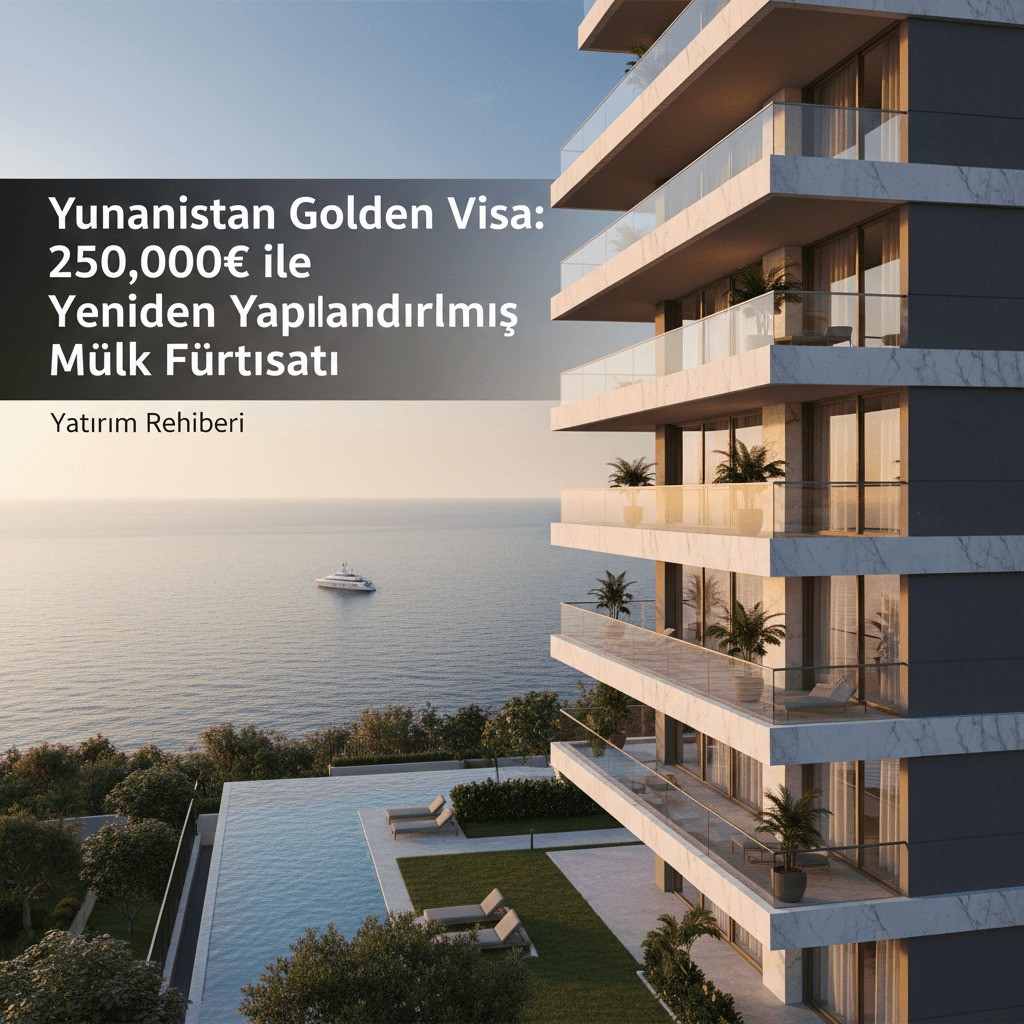
As European Golden Visa programs tighten their requirements, Greece's 2024 decision to raise investment tiers to as high as €800,000 caused concern among many global investors. However, buried within the legislation is a strategic pathway that remains at the original €250,000 entry point: the Greece reconstructed property Golden Visa. This unique route not only offers a lower investment threshold but also presents a compelling value-add opportunity by contributing to urban renewal. With Spain closing its program and Portugal removing its real estate option, this path has emerged in 2026 as one of the most intelligent gateways to EU residency.
This in-depth guide will walk you through the entire process of acquiring the Greek Golden Visa for €250,000 by converting a commercial property to residential use or by restoring a listed historical building. We will explore the complexities, true costs, advantages, and potential risks, empowering you to make an informed investment decision. This is more than a simple property purchase; it's a project to create value and build a future in Europe.
What Exactly is the Reconstructed Property Program?
The Greek Reconstructed Property Program operates on a different premise than the standard Golden Visa route. Its primary goal is to revitalize the country's underutilized building stock and increase the supply of residential housing. The program grants investors the right to apply for a Golden Visa by purchasing a qualifying property for at least €250,000 and undertaking the necessary works to convert or restore it for residential use.
Two main types of properties qualify under this program:
- Conversion of Commercial Properties: This involves purchasing properties zoned for commercial use—such as disused offices, shops, workshops, or warehouses—and, with the proper permits and renovations, transforming them into modern residential units.
- Restoration of Listed and Historical Buildings: This path focuses on acquiring buildings of cultural or architectural significance (known in Greek as Διατηρητέα / Diatiritéa) that are in a state of disrepair. The investor must restore them to a habitable condition while preserving their original architectural character.
Why Does This Program Exist? The Government's Strategy
The Greek government's decision to maintain this €250,000 special route while increasing the standard Golden Visa tiers in 2024 was driven by several strategic objectives. It reflects a sophisticated urban planning vision that goes beyond simply attracting foreign capital.
Addressing the Housing Shortage
Major cities like Athens and Thessaloniki are facing a significant housing supply crisis, exacerbated by the proliferation of short-term rentals like Airbnb. The government aims to alleviate this pressure by incentivizing the conversion of thousands of square meters of vacant commercial space into new homes. Investors in this program become part of the solution.
Combating Urban Decay and Preserving Heritage
Greece is home to a rich architectural heritage, but many historic buildings have fallen into disrepair due to high maintenance costs. This program channels private capital into their restoration, aiming to both rejuvenate the aesthetic fabric of cities and preserve cultural landmarks for future generations.
Directing Investment to Areas in Need
The standard Golden Visa program led to investment concentration in prime tourist areas (Mykonos, Santorini, the Athens Riviera), driving up prices for locals. The reconstruction program encourages investors to look at central but overlooked neighborhoods that are in greater need of regeneration, fostering more balanced urban development.
🏠 Unlock Investment Opportunities in Greece
Let us help you navigate Greece's complex real estate market. We can identify the best properties for the €250,000 reconstruction program and build your expert team.
📞 +90 552 688 0195 | 📧 ashkan.ahani@century21.com.tr
A Step-by-Step Guide to the Reconstruction Golden Visa Process
This path is more involved than a standard property acquisition and requires a multidisciplinary team of experts, including a lawyer, architect, and contractor. The process generally unfolds as follows:
- Assemble Your Expert Team & Define Strategy: Your first step is to retain a team specializing in Greek real estate and construction law: a lawyer, an architect, and a trusted contractor. Together, you will define your investment goals, budget, and timeline.
- Identify and Pre-Assess Potential Properties: Your architect and real estate advisor will source commercial or historical properties suitable for conversion or restoration. A preliminary feasibility study is conducted for each, examining zoning, legal restrictions, and estimated conversion costs.
- Conduct In-depth Due Diligence: Once a property is selected, your lawyer performs a thorough legal check on title deeds, liens, and legal status. Concurrently, your architect prepares a detailed report on the building's structural integrity, the permits required for the project, and a comprehensive cost analysis.
- Purchase and Financial Setup: If due diligence is clear, the purchase process begins. This involves obtaining a Greek Tax ID Number (AFM), opening a Greek bank account, and executing the purchase contract to transfer the title.
- Architectural Design and Permit Application: Your architect will create the detailed architectural plans for the property's conversion or restoration. These plans are submitted to the relevant municipal planning office and, for historical buildings, to the Archaeological Council to secure the necessary building permits. This is often the most critical and time-consuming stage.
- Golden Visa Application: With the property title and the approved conversion/restoration plans in hand, the Golden Visa application is submitted. The application must include official proof of the property's value and the clear intention to convert it.
- Construction and Restoration Phase: Once permits are issued, the construction begins under the supervision of your contractor. Your architect and advisor will oversee the project to ensure it adheres to the plans, budget, and timeline.
- Project Completion and Final Residency Permit: Upon completion of the work, a certificate of occupancy is obtained from the municipality. This document confirms the property is now legally a residence and is crucial for the final validation of your Golden Visa status.
Financial Analysis: The True Cost Beyond €250,000
The total capital outlay for an investor in this program extends far beyond the property's price tag. A comprehensive budget is essential for a successful project. The table below provides a realistic overview of potential costs.
| Cost Item | Description | Estimated Amount (€) |
|---|---|---|
| Property Purchase Price | Minimum threshold for the program. | 250,000+ |
| Property Transfer Tax | 3.09% of the contract price. | ~7,725 |
| Legal Fees | For due diligence and legal process. | 1-1.5% of property value |
| Notary & Land Registry Fees | For official transaction processing. | 1-1.2% of property value |
| Architectural & Permitting Fees | Design, drawings, and municipal fees. | 15,000 - 40,000 |
| Reconstruction Cost | Varies from €800 - €2,000 per sq. meter depending on condition. | 100,000 - 300,000+ |
| Golden Visa Application Fee | For the main applicant. | 2,000 |
Comparing the Investment Tiers (As of 2026)
To make the right choice, it's essential to compare the reconstruction option against the standard Golden Visa tiers.
| Criteria | €250K Reconstruction | €400K Standard (Zone B) | €800K Standard (Zone A) |
|---|---|---|---|
| Min. Investment | €250,000 | €400,000 | €800,000 |
| Property Type | Commercial, historical (conversion required) | Residential | Residential |
| Location | All of Greece | Areas outside Zone A | Athens, Thessaloniki, Mykonos, etc. |
| Complexity | High (Construction management) | Low (Turnkey purchase) | Low (Turnkey purchase) |
| Potential ROI | High (Value-add) | Medium | Medium-Low (Saturated market) |
| Process Time | 12-24 Months (incl. construction) | 3-6 Months | 3-6 Months |
Frequently Asked Questions (FAQ)
Can the restoration costs be included in the €250,000 investment amount?
While the law is somewhat ambiguous, the standard practice and expectation from immigration authorities is that the purchase price on the contract should be at least €250,000. Including renovation costs to meet the threshold is considered a grey area and can be risky. The safest approach is to purchase a property for €250,000 and budget for the renovation costs separately. For specific advice, it's best to contact us for a consultation →
Can I get the Golden Visa before the conversion project is completed?
Yes, you can. The Golden Visa application is submitted with the property title deed and the officially approved architectural plans for the conversion. This means you can receive your initial residency permit before or during the construction phase. However, the renewal of your permanent residence card and the final legal re-classification of the property as residential will depend on the project's successful completion and the issuance of an occupancy certificate.
Can I rent out the property immediately after purchase?
No. Until the property is legally converted to residential use and has received a certificate of occupancy from the municipality, it retains its commercial status and cannot be legally rented as a residence. Once the project is complete, you can rent it out under standard long-term residential leasing laws.
What restrictions will I face when restoring a historical building?
Listed buildings (Diatiritéa) are under the strict supervision of the Greek Central Archaeological Council. Preservation of the building's facade, original windows, doors, roof structure, and other key architectural elements is mandatory. While there is more flexibility for the interior, modifications to the main structural components are generally restricted. This makes such projects potentially more expensive and time-consuming.
Do I need to be in Greece to manage the project?
No, it is not necessary. By granting Power of Attorney to a trusted professional team—your lawyer, architect, and project manager—you can oversee the entire process remotely. Your team will provide regular progress reports, photos, and videos to keep you informed. At Century21 Perfect, we offer turnkey services with our trusted local partners for such complex projects.
What happens if the conversion project goes over budget?
This is one of the most significant risks in reconstruction projects. It is crucial to allocate a contingency fund of at least 15-20% of the total construction budget from the outset. If costs exceed the budget, you will be required to provide the additional funding to complete the project. Failure to do so could leave the project unfinished and jeopardize your Golden Visa status.
Which areas have high potential for commercial-to-residential conversions in 2026?
In Athens, neighborhoods like Psiri, Metaxourgeio, Kerameikos, and the areas around Omonia Square hold high potential due to their central locations and the availability of older commercial buildings suitable for conversion. In Thessaloniki, the industrial areas around the port and Vardar are gaining attention. These districts offer more attractive per-square-meter prices and higher potential for value appreciation compared to prime residential zones.
Expert Advice: Keys to Success on This Path
- Build the Right Team First: Your most important investment, even before the property, is in your lawyer, architect, and contractor. Check their references and verify their experience with similar conversion projects.
- Plan Your Budget Realistically: Account not only for the purchase and construction costs but also for all taxes, fees, permits, and a contingency fund of at least 20% for unforeseen issues.
- Be Patient: This is not a three-month process. Permits, bureaucracy, and construction take time. Go into the project with the expectation that it could take 18 to 24 months to complete.
- Master Local Regulations: Each municipality can have different zoning and conversion rules. Ensure your architect is an expert in these local regulations.
- Define Your Exit Strategy: Will you use the property yourself, rent it out, or sell it upon completion? This decision will influence the project's design, materials, and overall finish.
Conclusion: A Strategic Gateway or a Risky Venture?
The Greek €250,000 reconstruction Golden Visa program is undoubtedly one of the most intriguing EU residency opportunities on the market today. Unlike standard buy-and-hold programs, it offers the investor a chance to create value and potentially achieve a much higher capital gain. However, it is a complex path that demands more initial capital, greater patience, and a reliance on the right professional team.
With proper planning and expert management, this program can be more than just a residency permit; it can be a profitable real estate project that contributes to Greece's urban renewal. If you are considering this unique opportunity to build a future in Europe, we can guide you at every step of your project. You can contact us if you need expert support on this matter.
Bring Your Project to Life
From finding the right property to assembling a reliable local team for your reconstruction project in Greece, we are here to support you. Contact us for a free initial consultation.
📞 +90 552 688 0195 | 📧 ashkan.ahani@century21.com.tr
- There is still a €250,000 investment option within the Greek Golden Visa program.
- This option requires the conversion of a commercial or historical property into a residence.
- The process is more complex and time-consuming than a standard property purchase.
- The total cost includes significant restoration and legal fees on top of the property price.
- With the right strategy, this path offers the potential for a high return on investment.