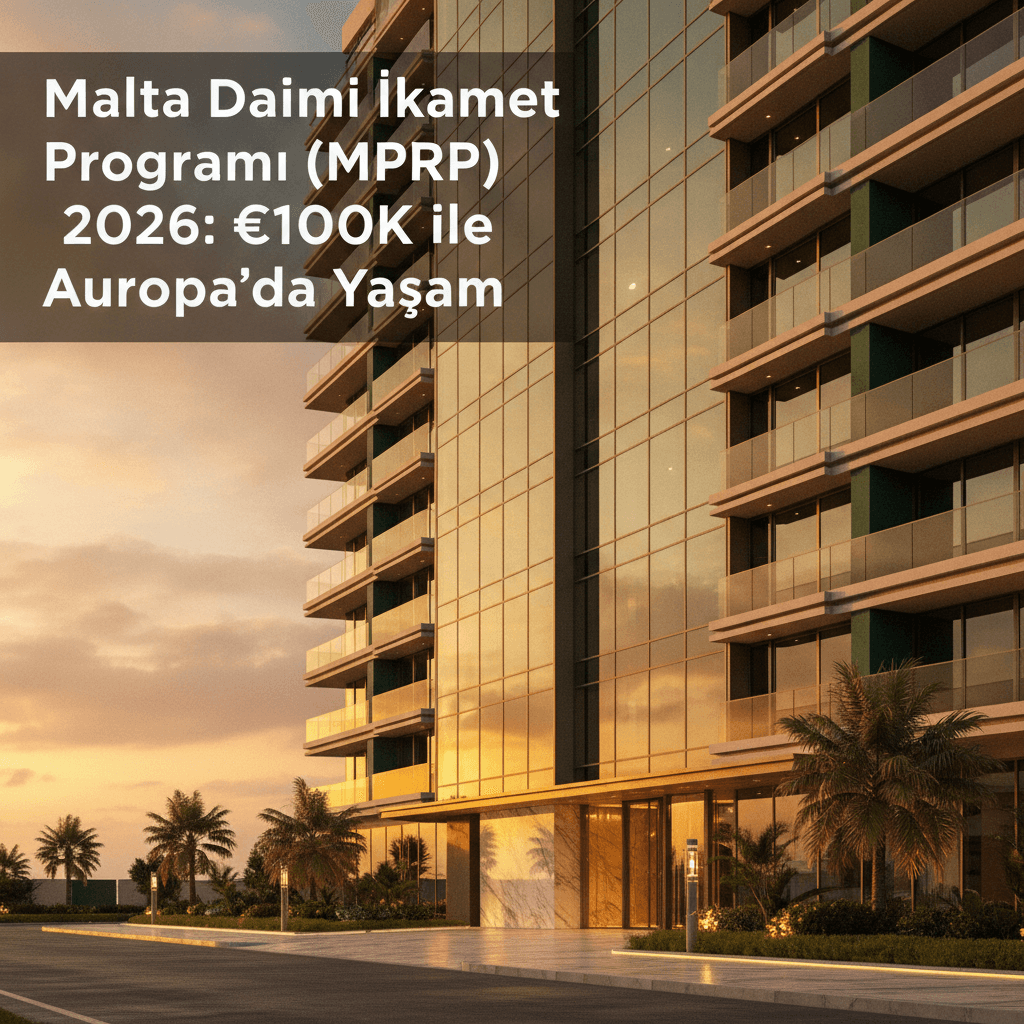
What is the Malta Permanent Residence Programme (MPRP)?
In a world where global mobility is paramount, securing a foothold in the European Union is a strategic goal for many investors. With major Golden Visa programs like Spain's and Portugal's closing their real estate routes, the Malta Permanent Residence Programme (MPRP) stands out in 2026 as one of the most reliable and straightforward paths to EU residency. This program offers non-EU nationals and their families the right to reside indefinitely in Malta and travel visa-free across the Schengen Area in exchange for a qualifying investment.
It's important to distinguish MPRP from citizenship-by-investment. MPRP grants you a permanent residence permit, not a passport. This permit is valid for life, with the residence card requiring a simple renewal every five years. One of the program's most compelling features is the absence of any minimum stay requirement. This flexibility makes it an exceptional choice for investors who want a solid 'Plan B' in Europe without needing to uproot their current business or lifestyle. Our experience shows that clients value this freedom above all else.
MPRP Investment Options & Costs in 2026
The Malta MPRP offers two distinct pathways for investors: leasing a property or purchasing one. Each route has a different capital outlay and strategic advantages. Applicants must choose the path that best aligns with their financial capacity and long-term goals.
H3: Option 1: The Property Lease Route
This is the most common and capital-efficient option. It requires the applicant to rent a residential property in Malta for a minimum of five years. The qualifying annual rent depends on the location:
- For properties in the South of Malta or on the island of Gozo: A minimum annual rent of €10,000.
- For properties in the North or Central Malta: A minimum annual rent of €12,000.
Choosing this route involves a higher government contribution, but a significantly lower initial investment.
H3: Option 2: The Property Purchase Route
For those who see the value in owning a tangible asset in the Mediterranean, this option is ideal. The minimum property value is also location-dependent:
- For properties in the South of Malta or Gozo: A minimum purchase price of €300,000.
- For properties in the North or Central Malta: A minimum purchase price of €350,000.
Purchasing a property reduces the required government contribution, making it a sound long-term strategy for investors who might consider relocating or benefiting from Malta's stable real estate market.
H3: Mandatory Contributions and Fees
Regardless of the property route chosen, all applicants must fulfill the following financial requirements:
- Government Contribution: €28,000 if purchasing a property, or €58,000 if leasing.
- NGO Donation: A mandatory donation of €2,000 to a registered Maltese philanthropic, cultural, sport, or scientific non-governmental organisation.
- Administrative Fees: A non-refundable fee of €40,000 paid to the Residency Malta Agency (RMA) to cover application processing and due diligence.
🏠 Get Expert Guidance on Your Malta Investment
Let our team at Century21 Perfect Bağdat Caddesi guide you through every step of the MPRP application process.
📞 +90 552 688 0195 | 📧 ashkan.ahani@century21.com.tr
The MPRP Application Process: A Step-by-Step Guide
The application process for the Malta Permanent Residence Programme is transparent and well-defined, typically taking between 4 and 8 months from submission to completion. Here are the key steps for 2026:
- Onboarding and Initial Checks: The journey begins by engaging a licensed agent. The agent conducts preliminary due diligence and helps you prepare your application file.
- File Submission: Your agent submits the complete application to the Residency Malta Agency (RMA), along with payment of the initial €10,000 administrative fee.
- Due Diligence Process: The RMA performs a thorough, multi-tiered due diligence check on the main applicant and all dependents. This is the most critical phase, designed to uphold the integrity of the program.
- Approval in Principle: Upon successful completion of the due diligence, the RMA issues a Letter of Approval in Principle. This signals that you are clear to proceed with the main investments.
- Fulfillment of Investments: After receiving approval, you must pay the government contribution, the NGO donation, and finalize your property lease or purchase.
- Biometrics and Card Issuance: The final step involves visiting Malta to provide biometric data (fingerprints and photos). Shortly after, your permanent residence cards are issued.
Eligibility and Family Inclusion
The MPRP is designed to be inclusive, allowing investors to secure residency for their entire family across multiple generations.
H3: Main Applicant Requirements
The main applicant must be a non-EU/EEA/Swiss national, have a clean criminal record, and prove they hold capital of at least €500,000, of which a minimum of €150,000 must be in liquid financial assets.
H3: Qualifying Dependents
- Spouse or Partner: In a marriage or a relationship with similar status.
- Children: Unmarried and principally dependent on the main applicant, with no age limit.
- Parents and Grandparents: Principally dependent on the main applicant or their spouse.
Cost Comparison: Leasing vs. Purchasing in 2026
To aid your decision-making, this table breaks down the minimum costs for a single applicant under both investment scenarios.
| Cost Item | Property Lease Option | Property Purchase Option |
|---|---|---|
| Government Contribution | €58,000 | €28,000 |
| Administrative Fees | €40,000 | €40,000 |
| NGO Donation | €2,000 | €2,000 |
| Property Investment (5-Year Min.) | €50,000 (5 x €10,000) | €300,000 |
| Total Minimum Outlay | €150,000 | €370,000 |
The lease option clearly requires a much lower initial capital outlay. However, purchasing property provides a real asset in a growing market and may offer capital appreciation over the long term, offsetting the higher initial cost.
Frequently Asked Questions (FAQ)
H3: Does the Malta MPRP lead to citizenship?
No, the MPRP is a permanent residency program, not a direct path to citizenship. It provides the right to live in Malta indefinitely. Acquiring Maltese citizenship is a separate process, typically requiring a longer period of effective residence and meeting different criteria under the Maltese Citizenship Act.
H3: Can I work in the EU with an MPRP card?
The MPRP card does not automatically grant you the right to work in Malta or elsewhere in the EU. To be employed in Malta, you would need to apply for a separate work permit. However, the program does allow you to register a company in Malta and conduct business from there.
H3: Do I have to live in Malta to maintain my residency?
No, and this is a major benefit. There is no minimum physical stay requirement to maintain your permanent resident status. You are only required to hold your qualifying property (either leased or owned) for the initial five-year period.
H3: What is the real processing time?
A realistic timeline, assuming a well-prepared application, is between 4 and 8 months from the date of submission to the issuance of residence cards. The duration can vary based on the complexity of the application and the current workload of the Residency Malta Agency.
H3: What happens after the initial 5-year investment period?
After five years, you are no longer required to maintain the initial high-value property investment. You can sell your property or terminate your lease. To maintain your residence status, you must simply continue to hold a registered residential address in Malta, which can be a much lower-cost rental property.
H3: Can my application be rejected?
Yes. Rejections typically occur due to a failed due diligence check, providing incomplete or false information, or having a criminal record. Engaging a reputable and licensed agent is crucial to minimize the risk of rejection by ensuring your application is flawless from the start.
H3: What are the tax implications of becoming a Maltese resident?
Malta offers an attractive tax system for residents who are not domiciled there. If you do not spend more than 183 days a year in Malta, you are generally only taxed on income arising in Malta and on foreign source income that is remitted to Malta. There is no tax on your worldwide assets or income that is not brought into the country.
Conclusion: Is Malta's Permanent Residency Right for You in 2026?
As other European investment migration programs become more restrictive, the Malta Permanent Residence Programme shines in 2026 as a stable, transparent, and family-oriented solution. Its relatively low entry cost via the lease option (approx. €150,000), combined with the immense benefit of Schengen access, makes it a highly competitive option for global investors. The flexibility of no minimum stay requirements and multi-generational family inclusion further cements its value.
Embarking on this journey requires careful planning and expert guidance. By assessing your financial standing, long-term ambitions, and family needs, you can make an informed decision. If securing a safe future for your family with unrestricted access to Europe aligns with your goals, we invite you to contact us to explore the opportunities that the Malta MPRP can offer you.
🏠 Professional Residency Advisory
Let the Century21 Perfect team in Bağdat Caddesi assist you.
📞 +90 552 688 0195 | 📧 ashkan.ahani@century21.com.tr
- What the Malta Permanent Residence Programme (MPRP) is and the rights it provides.
- The updated 2026 investment options: property lease vs. property purchase.
- A step-by-step breakdown of the application process and its timeline.
- Who is eligible to apply and which family members can be included.
- A clear cost comparison between the lease and purchase scenarios.