The Allure of Caribbean Passports and the Schengen Advantage
Last Updated: June 2026 | Reading time: 12 min
For years, Citizenship by Investment (CBI) programs have been a go-to solution for global investors seeking enhanced mobility and tax efficiency. The 'Caribbean Five'—St. Kitts & Nevis, Grenada, Dominica, Antigua & Barbuda, and St. Lucia—became particularly popular due to their cost-effectiveness and streamlined processes. The crown jewel of these programs has always been the visa-free access their passports provide to the European Union's Schengen Area, allowing holders to travel freely for business or leisure for up to 90 days within a 180-day period. However, as of 2026, the future of this invaluable perk is shrouded in significant uncertainty.
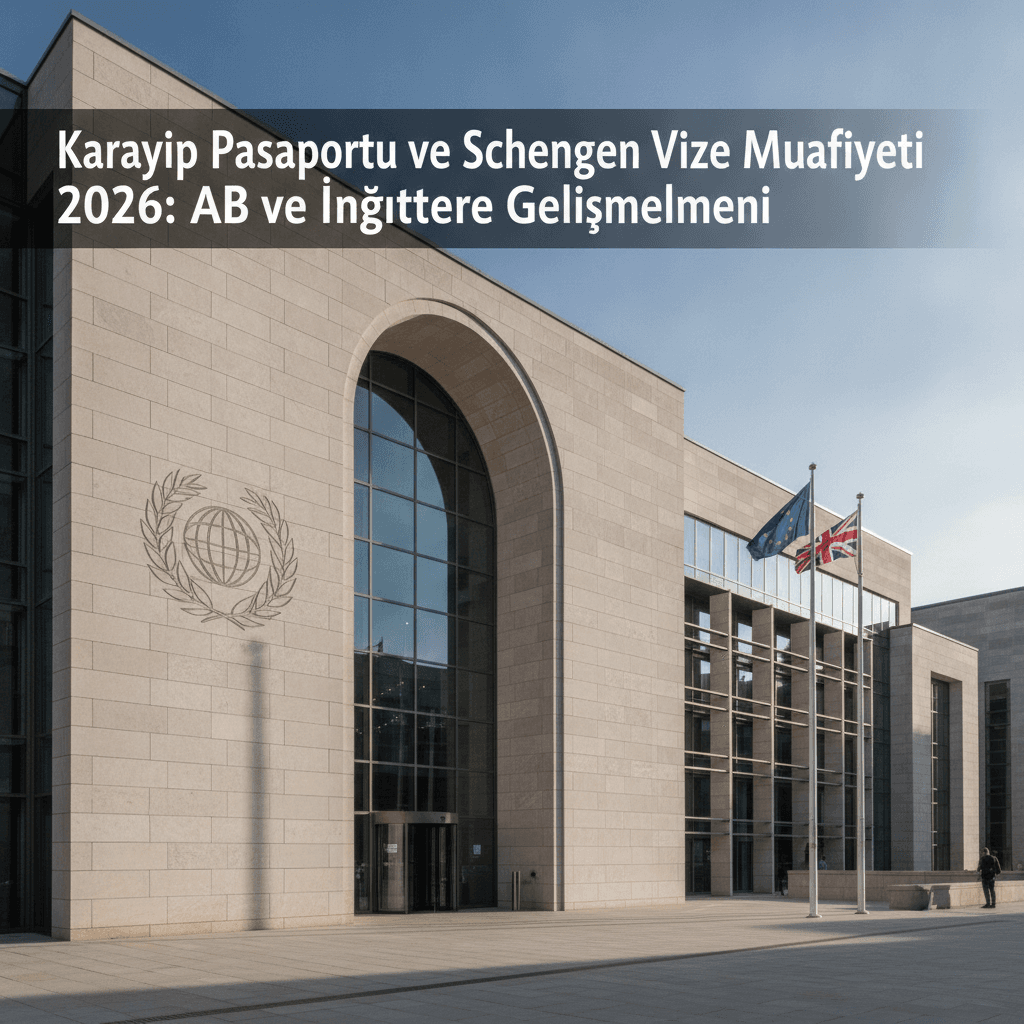
The European Union and the United Kingdom have ramped up pressure on Caribbean nations, citing major concerns over security and a lack of transparency in their CBI programs. The critical question investors must now ask is: will the Caribbean passport Schengen visa waiver survive beyond 2026? This comprehensive guide will break down every facet of the issue, from the legal framework and recent developments to alternative pathways for savvy investors.
By Ashkan Behbud — Century 21 Perfect, 15+ years of real estate expertise, Bağdat Caddesi, Istanbul.
The Legal Framework: Why the EU and UK Are Concerned
The increased scrutiny on Caribbean passports stems from a few core issues. The European Commission has repeatedly argued that these CBI schemes pose inherent security risks and undermine the integrity of the EU's common visa policy. The primary concerns revolve around inadequate due diligence on applicants and the granting of citizenship without a "genuine link" to the country.
European Commission Reports and the Visa Suspension Mechanism
In a series of reports over the past few years, the European Commission has taken direct aim at CBI programs. The Commission's stance is that these schemes could allow individuals who pose a security risk to gain access to the EU. These concerns have the potential to trigger the EU's "visa suspension mechanism." This legal tool allows the EU to temporarily suspend a country's visa waiver agreement if it breaches the terms or poses a security threat. The case of Vanuatu, which lost its Schengen visa-free access in 2022, is a stark reminder that this is not an idle threat but an active policy tool.
The Role of ETIAS and the Entry/Exit System (EES)
Now fully operational in 2026, the European Travel Information and Authorisation System (ETIAS) and the Entry/Exit System (EES) have introduced a new layer of screening for citizens of visa-exempt countries. Holders of Caribbean passports must now complete an online ETIAS application before traveling to the Schengen Area. This application triggers extensive checks against multiple security databases. ETIAS can effectively act as a filter, allowing authorities to more closely scrutinize individuals who have obtained citizenship through CBI programs. An ETIAS denial means a person cannot enter the Schengen Area, despite their passport's theoretical visa-free status.
The UK's Parallel Moves: The ETA System
The United Kingdom is moving in lockstep with the EU. By implementing its own Electronic Travel Authorisation (ETA) system, the UK has also begun pre-screening visitors from countries that do not require a visa. Its decision in 2024 to impose a visa requirement on Dominica and Vanuatu demonstrates its firm stance on this issue. The UK's actions are often seen as a bellwether for the EU. It is highly unlikely that the EU would maintain a visa waiver for a country that the UK has deemed a security concern.
🏠 Secure Your Investment Portfolio
Looking to eliminate uncertainty in your global mobility? Speak with our expert team to explore more stable alternatives, such as the Turkish Citizenship by Investment program.
📞 +90 552 688 0195 | 📧 ashkan.ahani@century21.com.tr
The Caribbean Countries at Risk and Their Current Status
Five main Caribbean nations are under the microscope. While these countries have taken some steps to address the EU's and UK's concerns, the pressure continues to mount. Here is a snapshot of their status as of 2026:
| Country | CBI Program Inception | Current Status in 2026 |
|---|---|---|
| St. Kitts & Nevis | 1984 | Has tightened due diligence processes and increased investment thresholds. In active dialogue with the EU. |
| Dominica | 1993 | Lost UK visa-free access in 2024. Considered at the highest risk for losing Schengen access. |
| Grenada | 2013 | Retains its E-2 treaty visa advantage with the USA, but EU pressure is intensifying. |
| Antigua & Barbuda | 2013 | Closed applications to Russian and Belarusian citizens to align with Western policies. |
| St. Lucia | 2015 | One of the newer programs. Has committed to enhancing its security and transparency protocols. |
Potential Scenarios and Their Consequences for Investors
Given the current climate, investors who either hold or are considering a Caribbean passport face a few potential outcomes in the near future.
Scenario 1: Full Suspension of Visa-Free Travel
This is the worst-case scenario. The EU could invoke the suspension mechanism and completely revoke Schengen visa-free travel for one or more Caribbean nations. In this event, passport holders would need to apply for a Schengen visa for every trip to Europe. This would nullify the passport's primary benefit and severely damage the return on investment. We've had several clients at our office pivot away from Caribbean options specifically due to this risk, opting instead for alternatives like our Golden Visa program services →.
Scenario 2: De Facto Restrictions via ETIAS
Even if the visa waiver remains officially in place, the rejection rate for ETIAS applications could surge. The EU might flag CBI citizens as 'high-risk,' making ETIAS approvals more difficult to obtain. This would create significant uncertainty for travel plans and render the visa-waiver practically useless. Last year, one of our contacts mentioned missing a critical business meeting in Germany because his ETIAS approval was unexpectedly delayed.
Alternative Routes: The Turkish Citizenship by Investment Program
The uncertainty surrounding Caribbean programs is leading investors to seek more stable and reliable alternatives. The Turkish Citizenship by Investment (TCBI) program stands out as a compelling option. Turkey's geostrategic importance, robust economy, and long-standing relationship with the EU provide a much more solid foundation.
The key advantage of the Turkish program is that citizenship is granted based on a tangible investment in the country. The requirement to purchase real estate worth at least $400,000 USD establishes the "genuine link" that the EU criticizes other programs for lacking. This is fundamentally different from the "passport for sale" model. Furthermore, Turkey's status as a NATO member and a G20 economy lends its passport greater international prestige and stability. You can check your eligibility instantly with our citizenship checker tool →.
Frequently Asked Questions (FAQ)
If I have a Caribbean passport, will I lose my Schengen travel rights immediately?
No, not immediately. The process typically begins with a series of warnings and negotiations. The EU usually gives the country in question a period to address its concerns before a suspension is enacted. However, the risk is real and the situation must be monitored closely. As of 2026, the outcome of your ETIAS application will directly determine your ability to travel.
If visa-free access is revoked, can I get my investment back?
In almost all cases, no. The investments made in CBI programs, whether through donation or real estate, are non-refundable. Once citizenship is granted, a subsequent loss of the passport's travel benefits does not constitute grounds for a refund. This is one of the primary risks of the investment.
Does a Turkish passport offer visa-free access to the Schengen Area?
Currently, it does not. Turkish citizens are subject to visa requirements for the Schengen Area. However, Turkey is in an ongoing visa liberalization dialogue with the EU. Moreover, the process for Turkish citizens to obtain a Schengen visa is generally structured and predictable. The key point is that the passport's value is not contingent on a single visa waiver; a Turkish passport offers far broader rights, including the right to live, work, and establish a business in a major global economy.
What is ETIAS and how will it affect me?
ETIAS is a pre-travel authorization system for visitors from visa-exempt countries. You must apply online before your trip. Your application is checked against security databases. If approved, the authorization is valid for 3 years for multiple entries. If denied, you cannot enter the Schengen Area and may need to apply for a full visa.
How does the UK's position affect the EU's?
The UK and EU cooperate closely on security and immigration matters. If the UK deems a country a "security risk" and revokes its visa waiver, it sends a powerful signal to the EU. Historically, there has been a trend of the EU eventually following steps taken by the UK in this domain.
Why is professional advice crucial in this process?
Citizenship by investment is a complex, long-term decision, and the legal landscape is constantly shifting. An experienced consultant can help you analyze current risks, compare different programs, and find the most secure, stable solution that aligns with your investment goals. A wrong move can lead not only to financial loss but also to a future restriction of your freedom of movement.
Conclusion: A Strategic Re-evaluation for Investors
The value of the Caribbean passport Schengen visa waiver is under severe threat in 2026. Heightened security scrutiny from the EU and UK, coupled with new control mechanisms like ETIAS and ETA, is eroding the most prized feature of these passports. For investors, it is no longer sufficient to look at today's visa-free map. It is imperative to consider the long-term sustainability, political stability, and international reputation of a CBI program.
In this climate of uncertainty, programs based on tangible real estate investment that require a genuine link to the country, such as Turkey's, are emerging as a safer haven. To safeguard your investment and your future global mobility, it is critical to evaluate all options carefully and seek expert advice. If you need professional support in this matter, please contact us →. Remember, the right investment decision opens doors not just for today, but for tomorrow as well.
Disclaimer: The information provided in this article is for general informational purposes only and does not constitute legal advice. You should consult with an independent legal professional before making any decisions related to citizenship by investment or visa matters.
🏠 Build Your Future on Solid Ground
If the uncertainties in the Caribbean programs concern you, explore the stable and profitable real estate investment opportunities that Turkey has to offer.
📞 +90 552 688 0195 | 📧 ashkan.ahani@century21.com.tr
- Why the Schengen visa waiver for Caribbean passports is at risk as of 2026.
- The security concerns of the EU and UK and their steps to tighten visa policies.
- How the new ETIAS and ETA systems will impact visa-free travel.
- What the suspension of visa-free access means for investors.
- Why Turkey's citizenship by investment program may be a more secure alternative.